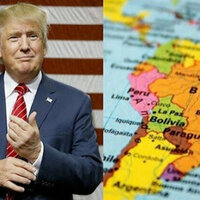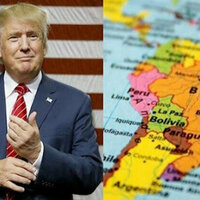


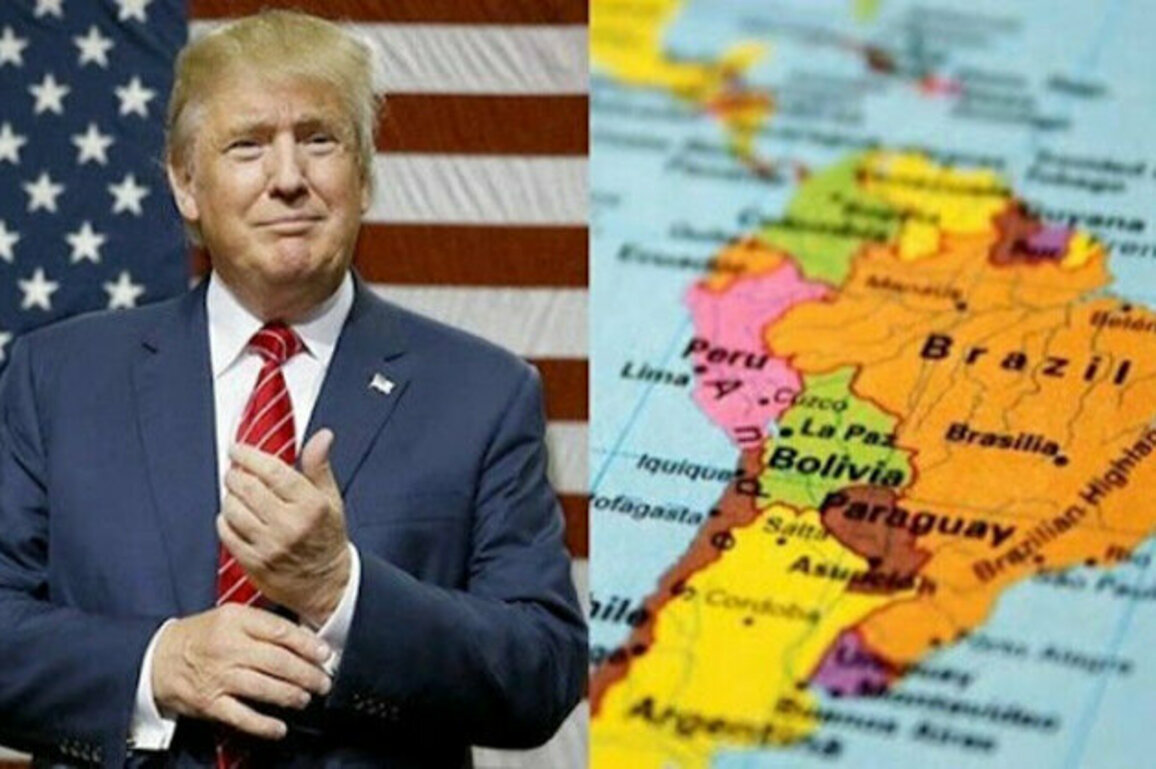
Nobody is complaining anymore about Latin America and the Caribbean beingneglectedby the hegemon to the north. The Trump administration is contending with it on multiple fronts: prioritizing massive deportations, halting the flood of drugs, combatting threats to US security, and stopping other countries fromripping us offin trade. The over 200-year-old Monroe Doctrine is alive and on steroids.
But has Washington taken a sharp right turn, qualitatively departing from past practices, or simply intensified an already manifest imperial trajectory? And, from a south-of-the-border perspective, to what extent are the perceived problems made in the USA?
Externalization of problems
The view from Latin America and the Caribbean (LAC) is that the Yankees have a problem; they project their issues onto their southern neighbors. An extreme example is Barack Obamas baselessdeclarationin 2015 of a national emergency subsequently reaffirmed by each successive president because of the unusual and extraordinary threat posed by Venezuela.
From Washingtons imperial perspective, problems are seen as coming from the south with the US as the victim when, as in the case of Venezuelas national security, reality is inverted.
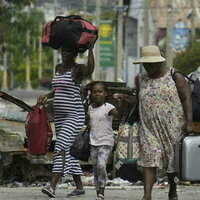
Another case in point: migration is seen as a supply-side conundrum; they are invading us. In practice, deliberate past US policy (Trump has largely ended these practices)encouragedmigration from Venezuela, Nicaragua, and especially Cuba to weaken their governments.
More to the point, as has been admitted by some of theperpetrators, the main driver for migrants to leave their homes and face great risks in transit are not pull factors, such as a purported love of our democracy, but push factors. These range from capitalist exploitation of Central Americas Northern Triangle to the impoverishment caused by US unilateral coercive measures in Cuba, Venezuela and Nicaragua.
As for drugs, trenchantlypointed outby Mexican President Claudia Sheinbaum to her US counterpart, the US itself harbors cartels, is the largest narcotic consumer market, exports the majority ofarmamentsused by drug barons and hostsmoney laundering banks.
Rather than ripping off Uncle Sam in trade, the LAC region runs lopsided deficits in service industries, a trade benefit conveniently ignored when Trumps tariffs were calculated. US firms also benefit from LAC as a low-cost source of inputs and assembly for their supply chains. The imperialist narrative conveniently omits crediting its access to strategic resources at favorable terms and the dominance of US firms and dollar-based finance. Various trade agreements, which Trump treats as giveaways, in practice favor US corporations. Unequal exchange is established asa key factorin underdevelopment of the LAC region, despite Trumps assertion of the opposite.
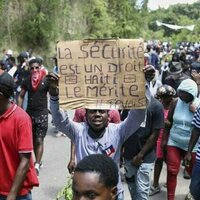
Finally, gang violence is another US export: literally so in the case of the notorious Mara Salvatrucha and Barrio 18 gangs which originated in Los Angeles and whose members weredeportedby US authorities to El Salvador.
Migration becomes invasion
Bidens ambivalence on migration, tightening aspects of border controls but encouraging more than half a million Latinos to enter the US via humanitarian parole, gave Trump an opening. He sold his working class base the notion that migrants were not just taking US jobs but were criminals. His populist argument appears to side with US workers, but doesnt impact the corporate elites who support him.
In fact, deportationshave not increased, but are now much higher profile and overtly political. So Venezuelans are arbitrarily characterized as gang members andsent to prisonin El Salvador. Deportations to other countries have involved waving the big stick: supposed allies, Costa Rica and Panama, have even been obliged to accept asylum seekers from elsewhere, rejected and abandoned by Washington.
The war on drugs risks becoming a literal war
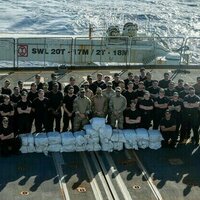
Trumps anti-drug policy has maintained a decades-long focus on supply-side enforcement with a renewed emphasis on deploying military assets to attack cartels and interdict drug shipments.
What has distinguished his approach is not so much the policy itself, but the blunt and often unilateral manner in which it is being implemented. Support is overtly conditioned on political alignment with Washingtons objectives.
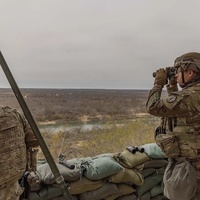
So troops are deployed on the southern border and Mexicos cartels are threatened with drone attacks, with no promise to consult Mexican authorities. Alleged members of Venezuelas Tren de Aragua gang are treated as terrorists, and wartime legislation is deployed against them as supposed agents of a narco-terrorist state.
Hemispheric security
The focus of current US policy in the region iscounteringChinese influence, particularly Beijings investments in infrastructure, telecommunications, and energy. The expanding role of the Chinese Communist Party in the Western Hemisphere, Trumps Secretary of State Marco Rubiocomplains, threatens US interests.
Yet while the US approaches geopolitics as a zero-sum game in which its military dominance is a priority, Chinaprofessesto follow the principles of equality and mutual benefit," offering carrots rather than waving a stick.
Chinas economic penetration has beenspectacular, making it the regions second largest trading partner and the first in South America itself. However, Trump has succeeded in forcing Panama to leave Chinas Belt and Road Initiative, while Brazil and Mexico, the regions two largest economies have yet to join, presumably due to US pressure. In Peru, users of a major port developed by China may be threatened by special tariffs.
The US International Development Finance Corporationsbudgetis slated to double. According to Foreign Policy, it should bestrengthenedstill further to combat Chinas influence. However, China has an enormous head start, and the US will struggle to catch up, especially as its other development agency, USAID, has had its budget decimated.
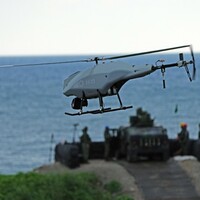
Militarily, Trump has increased the visibility and scope of US security operations in the region. Joint exercises, port calls, and programs like the Caribbean Basin Security Initiative continue to be ramped up. While Latin American leaders at Aprils CELAC summitcalled forthe region to be a zone of peace, Trump threatens war:
- Panama has been strong-armed into accepting a greater US military presence, in what has been dubbed acamouflaged invasion.
- Ecuadors President Noboa is accepting US military help as well as the private mercenaries ofBlackwaters Erik Prince, in his own war against gang violence.
- Marco Rubio has warned Venezuelas Nicols Maduro that we have a big navy, and it can get almost anywhere, threatening to deploy forces in neighboring Guyana.
NATOs presence in the region has been growing with Colombia already a partner and Argentina working to become one. The latters collaboration is vital to the Wests military role in the South Atlantic. Its president Milei has become tellingly ambivalent about his countrys claim to the British-occupied Malvinas islands, which are key to strategic dominance.
War by other means tariffs and sanctions
Washingtons enormous machinery of unilateral coercive measures (aka sanctions), nowtotal15,373 (of which over 5,000 were imposed in Trumps first term). The US blockade of Cuba has been tightened, and it is even attempting to throttle Cubas extraordinarily effective and popular medical missions abroad. Rubio issued an ominous warning: The moment of truth is arriving, Cuba is literally collapsing.
Sanctions against Venezuela have also been strengthened, despite Trump initially hinting at a more collaborative approach. Nicaragua has so far evaded new sanctions, but is threatened both with exclusion from the regional trade agreement (CAFTA) which benefits its exports, and with the loss of its remaining multilateral source of development finance.
The region escaped relatively lightly from Trumps Liberation Day declarations, with a new, minimum 10 percent tariff. Mexico still faces heavy tariff barriers and higher reciprocal tariffs on some other LAC countries Guyana, Venezuela and Nicaragua have been postponed until July.
Prospects for LAC unity or sowing seeds in the sea
Fragmentation of regional unity has been a long-standing US policy objective. Trump, in particular, openly disdains multilateralism, which is really another term for opposition to US imperialism.
Left-leaning electoral victories in Mexico (2018), Chile and Honduras (2021), and Colombia and Brazil (2022) have bolstered regional unity. This so-called Pink Tide added to the successes and leadership of Cuba, Nicaragua, and Venezuela and their respective socialist revolutions.
But upcoming elections in Chile and Honduras (November), and Colombia and Brazil (both 2026) could significantly reverse those gains. Continuation of leftist rule in Bolivia after this coming Augusts election looks dim, given bitter splits in its ranks. In areportedly fraudulentelection in Ecuador, the leftist challenge to the incumbent Noboa appears to have failed. However, current rightist hegemony in Perus 2026 election could be challenged.
Foreign Affairspredicts: Widespread frustration over organized crime throughout the hemisphere, as well as social changes such as the spread of evangelical Christianity, mean that right-wing leaders may be favored to win upcoming elections.
The future for progressive unity is therefore uncertain and has constrained LACs response to the Trumpocalypse. The Organization of American States will not question US imperialism. The alternative regional mechanism, CELAC, was set up without Washingtons participation, in part to rectify the OASs deficiencies. A broad, anti-imperialist statement drafted by Honduran President Xiomara Castro for its recent summit was heavily watered down by Argentina and Paraguay, who then rejected even the weakened version (Nicaragua also rejected it, for the opposite reasons). CELAC ended up decrying sanctions and calling for LAC to be a zone of peace, but failed to explicitly support Cuba or Venezuela against US aggression.
The multilateral body with a potentially strong but as yet unclear regional influence is the BRICS, of which Brazil is a founding member and now has associates Cuba and Bolivia. Other LAC countries are keen to join. But (in another show of regional disunity, this time on the left) Venezuelas and Nicaraguas recent applications were blocked by Brazil.
From Biden to Trump a bridge or a break?
Independent of the theatre surrounding Trumps performance style inflammatory language, threats, and public ultimatums his underlying policies are mostly aligned with the bipartisan consensus that has long guided US policy for the region. These include support for market-oriented reforms, militarized security assistance, antagonism to leftist governments, and containment of Chinese influence.
When the actual consequences are examined, what might be called the Biden bridge underlies, at least in part, Trumps distinctively confrontational practices. For instance, in March 2020, Trump placed a $15M bounty on the head of Venezuelan President Nicols Maduro. Biden reciprocated, upping the ante to $25M in January 2025. Or, compare the number of deportees inTrumpsterm to-date in 2025 to a comparable period in 2024, whenBidenbooted out even more migrants.
Under Trumps first administration, Bidens interim tenure, and now Trumps return, deportation machinery remained largely intact, enforcement funding stayed robust, and private detention centers prospered. In effect, Biden normalized the enforcement-heavy model, just without Trumps nativist overtones.
In short, Washingtons regional policy has become increasingly shaped by institutional inertia and bipartisan enforcement consensus, rather than sharply divergent ideological commitments.
That is not to say the policy has been static. In fact, the trajectory has been precipitously to the right. Warning that the anti-leftist component of Trumpism cant be overstated. Latin America analyst Steve Ellnerpredicts, when threats and populism lose their momentum, the anti-communist hawks may get their way.
So, there is a Biden-bridge in the sense of the continuation of a trajectory of increasingly aggressive imperialism from one president to the next. But there is also a bridge too far aspect, of whichdumping migrantsin El Salvadors pay-by-the-head prison is (so far) the most extreme example.
If there is an upside to Trumps return to the Oval Office, it is that he unapologetically exposes the core imperialist drive for naked domination, making explicit the coercive foundations of US hegemony in the region. While Trump pays scant regard to international commitments, disregarding trade treaties, his predecessors Biden, Obama, Clinton, and Bush all promoted the rules-based order to reflect US priorities, conveniently replacing international law.
Trump's policies have been a stark amplification of enduring US priorities. They have revealed the structural limits of regional autonomy under Yankee hegemony, especially as Trumps new territorial ambitions stretch from Greenland to Panama. The strongarm underpinnings of policies, previously cloaked in the hypocritical language of partnership, now take the form of mafia-style threats.
Roger D. Harrisis with theTask Force on the Americas, theUS Peace Council, and theVenezuela Solidarity Network. Nicaragua basedJohn Perryis with theNicaragua Solidarity Coalitionand writes for MR Online, the London Review of Books, FAIR, and Covert Action, among others..
Pressenza New York